Eighteen years · 2008 — 2026

I have been running GPU machines since 2016.

In 2016 I ran a fleet of Ethereum miners — rows of graphics cards under constant load, where the margin was electricity and the enemy was heat. In 2026 I build machines with the same parts, in your building, answering on your own documents with the network cable pulled out of the back.

Between those two things I spent a decade inside other people’s systems. That is the part that matters to you, because it is where I learned what goes wrong.
2008

An Xbox became a Linux server.

Self-taught SQL, HTML, CSS and JavaScript as a teenager. I modified a games console into a server to see whether I could, and found out that code controls hardware rather than the other way round.

2016

A fleet of Ethereum miners.

Building software and hardware together. Graphics cards running continuously, where thermals, power draw and failure are not abstractions.

I learned the physical layer before I was trusted with the logical one.

2017

ThinkJuice.

Co-founded a digital marketing agency with two partners. The first time the question was not “does it work” but “what is it worth to the business”.

2018

Distributed systems.

High-availability web applications. The work changed from making a thing run to making it keep running when a part of it does not.

2020

A multi-million-dollar ERP.

Leading Dynamics 365 Finance & Operations implementations, writing X++ against Fortune 500 supply chains.

Large systems, long timelines, and a clear view of where they are lost.

2023

Power BI and Azure SQL at Allstar Innovations.

Dashboards and ETL pipelines. Making a company’s own data answer its own questions — which is the same problem the machine solves, before the machine existed.

2026

Garnet Grid.

One machine, specified before it is bought, built on a bench, carried into your building. ERP, data and AI in one place.

Automated workflows and visual analytics, measured at a 40 per cent efficiency gain.

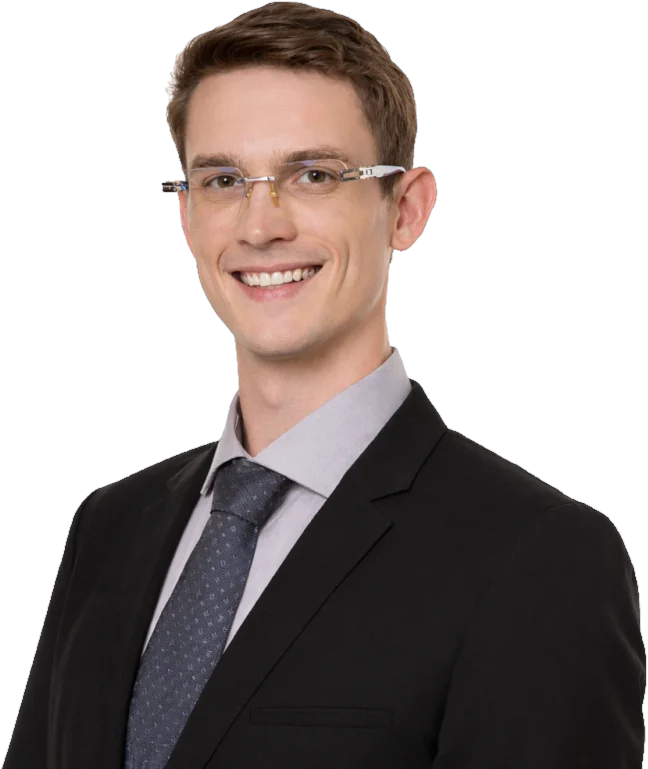
Jakub Dimitri Rezayev
Jakub Dimitri RezayevFounder, Garnet Grid Consulting LLC

The practical details.

Based
New York, NY
Practice
Private AI, on hardware in your building
Education
M.S. Customer Intelligence & Analytics
B.S. Finance & Computer Science
Pace University
Enterprise
Dynamics 365 Finance & Operations · Azure · Power BI · applied machine learning

The full version of the promise in chapter five, including what it does not cover: what we can and can’t see →

Watch one take shape.

Pick a brief. A plan is drafted and a concept rendered, both on hardware in this building, while you wait.

The question box here only answers from this site’s own pages. Your Garnet answers to you alone, so ours doesn’t run as a free service for the internet.

Everything it produces is yours. Your data, your prompts and the system’s outputs belong to you and stay in your building. See Terms §5.

What a real build adds.

The demo above is a sketch. A commissioned build is where the specifics live, and they are mostly the unglamorous ones:

  • Your material, indexed. The demo works from an example. A build starts by taking your actual documents, mail, drawings or photographs and making them retrievable on your own machine — which is most of the work and all of the value.
  • The sealed posture. Air-gapped where it should be, telemetry off, the machine quiet, and our access ending the moment it becomes yours.
  • Mesh, when you need it. Several of your machines can later work as one system.
  • Handover. People outside engineering have to be able to use it on a Tuesday, unaided. That is a design problem, and the one most private-AI projects lose on.

Design my Garnet →Walk the whole build in plain language →